
Avoid Sunday Night Dread: How to Automate Financial Reporting and Get Your Time Back
Automate Financial Reporting and Get Your Time Back
What Is NetSuite?
NetSuite is a cloud-based enterprise resource planning (ERP) platform that enables organisations to manage their core operations in one unified system. From finance and accounting to inventory, CRM and e-commerce, NetSuite provides a scalable solution that adapts to the needs of growing businesses. Its real-time data access, modular design and automation capabilities make it a powerful tool for companies seeking greater efficiency and control.
One of NetSuite’s standout features is its ability to automate financial reporting, helping businesses streamline their accounting processes and reduce reliance on manual tasks and spreadsheets. By integrating financial data across departments, NetSuite ensures that reporting is accurate, timely and aligned with strategic goals. Whether you're a small business or a multinational enterprise, NetSuite offers the flexibility and intelligence to support your financial operations.
How NetSuite Automates Financial Reporting
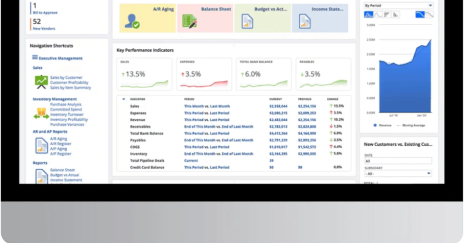
NetSuite’s ability to automate financial reporting is a game-changer for finance teams. Traditional reporting methods often involve hours of manual data entry, reconciliation and formatting. NetSuite replaces these tasks with intelligent automation that pulls real-time data from across the organisation and generates reports with minimal human input.
By using predefined templates and customisable dashboards, NetSuite allows users to:
- Schedule reports
- Apply filters
- Distribute insights automatically
This not only saves time but also improves accuracy and consistency. Staff are freed from repetitive, mundane tasks and can instead focus on strategic analysis and decision-making.
The ability to automate financial reporting also reduces the risk of human error. With NetSuite, data is consolidated from multiple sources and validated in real time, ensuring that reports reflect the true financial position of the business. This leads to better forecasting, improved compliance and more confident decision-making at every level.
NetSuite’s automation tools are designed to be user-friendly, making it easy for finance professionals to configure and manage reporting workflows. Whether it’s monthly financial statements, cash flow projections or audit-ready reports, NetSuite delivers the insights you need—without the manual effort.
Examples of Automated Tasks in NetSuite
There are many ways NetSuite can be used to automate financial reporting and related tasks. One of the most common is the automatic generation of:
- Profit and loss statements
- Balance sheets
- Cash flow reports
These can be scheduled to run at regular intervals and sent directly to stakeholders, eliminating the need for manual compilation.
Revenue recognition is another area where NetSuite excels. The platform applies accounting rules automatically, ensuring that revenue is recognised in accordance with standards such as ASC 606 or IFRS 15. This not only improves compliance but also reduces the workload for finance teams.
Bank reconciliations, often a time-consuming process, can be automated using NetSuite’s intelligent matching algorithms. The system:
- Compares bank transactions with internal records
- Flags discrepancies
- Suggests corrections
Significantly speeding up the reconciliation process.
Budgeting and forecasting are also enhanced through automation. NetSuite allows users to build dynamic financial models that update in real time as new data becomes available. This enables more accurate scenario planning and helps businesses respond quickly to changing market conditions.
Audit preparation is simplified as well. NetSuite maintains detailed audit trails and compliance records, making it easier to generate reports that meet regulatory requirements. All of these capabilities contribute to the broader goal to automate financial reporting and give teams more time to focus on what matters.
Everything Else You Need to Know About Automating Financial Reporting with NetSuite
How can NetSuite help automate financial reporting?
NetSuite uses real-time data and predefined templates to generate reports automatically, reducing manual effort and improving accuracy.
Can NetSuite customise reports for different departments?
Yes. NetSuite allows users to create tailored dashboards and reports for finance, operations, sales and other departments, all within the same system.
Is NetSuite suitable for small businesses looking to automate financial reporting?
Absolutely. NetSuite’s scalable design means that even small and medium-sized enterprises can benefit from automation without the complexity of larger systems.
Does NetSuite support compliance with financial regulations?
Yes. NetSuite includes built-in compliance tools for standards such as ASC 606, IFRS and GAAP, and maintains detailed audit trails for transparency.
How quickly can I see results after automating financial reporting with NetSuite?
Many organisations experience time savings and improved reporting accuracy within the first cycle, especially when automation is fully configured.
If you’re ready to eliminate tedious reporting tasks and reclaim your time, NetSuite offers the tools to make it happen. From automated statements to intelligent forecasting, you can avoid the Sunday night dread by using NetSuite’s advanced automation functions.
Get in touch with us today for a free, no-obligation chat about how NetSuite can help your organisation run better, faster and with greater confidence. Let us show you how to automate financial reporting and transform your finance function.